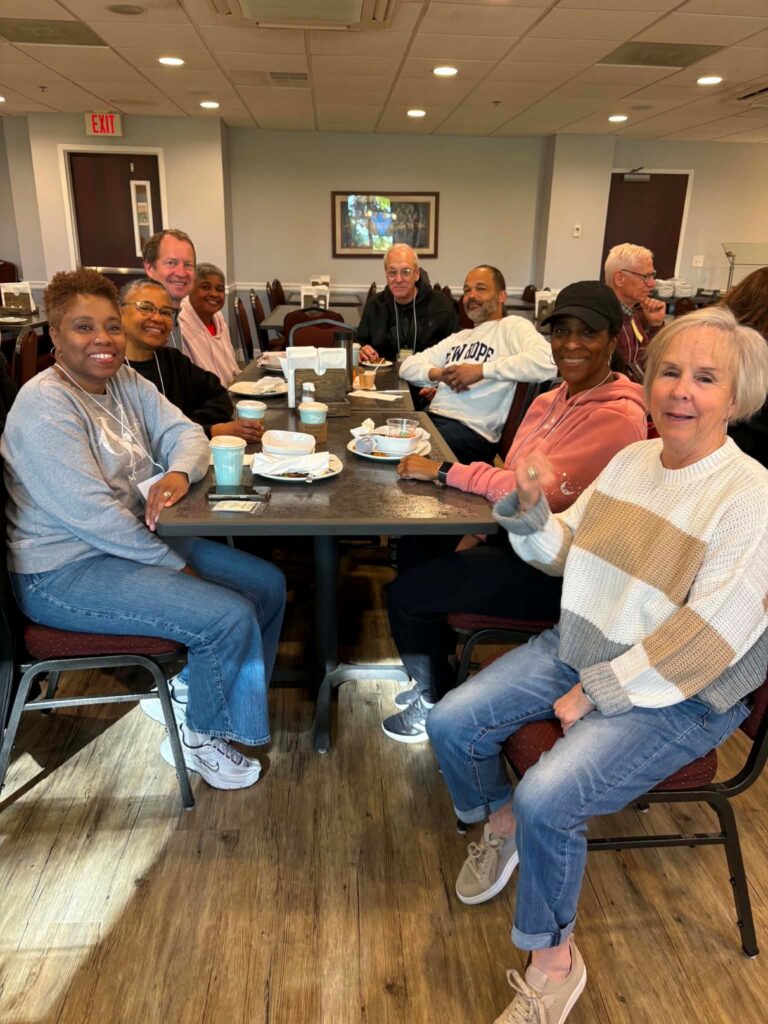


As part of the 2026 Care Partner Wellness retreat, participants were asked to stop and reflect what the time together over the weekend of May 1-2, 2026 meant to them or impacted their journey. Watch the video of this year’s retreat and then read the meaningful thoughts participants shared. The following series of reflections provides a glimpse into the world that care partners inhabit, their needs, their struggles, and how taking care of themselves is crucial in the midst of caring for a partner with a young-onset dementia (YOD) diagnosis.
Finding Breath: A Care Partner’s Reflection on the Retreat by Moira
As I drove home from our 30-hour respite, I noticed something unfamiliar — a quiet inside me that I hadn’t felt in a very long time.
For those 30 hours, I had released the worry. The constant, low-grade hum of it that never fully stops: Why is he 10 minutes late? Did he remember to eat? Did he walk the dogs? Is it still safe for him to drive? Why has he stopped playing basketball? He couldn’t fill out the simplest form — is he getting worse?
I had let all of it go. I had lived, simply, in the moment. And it was only on the drive back — returning to life — that I fully understood how deeply I had been able to breathe.
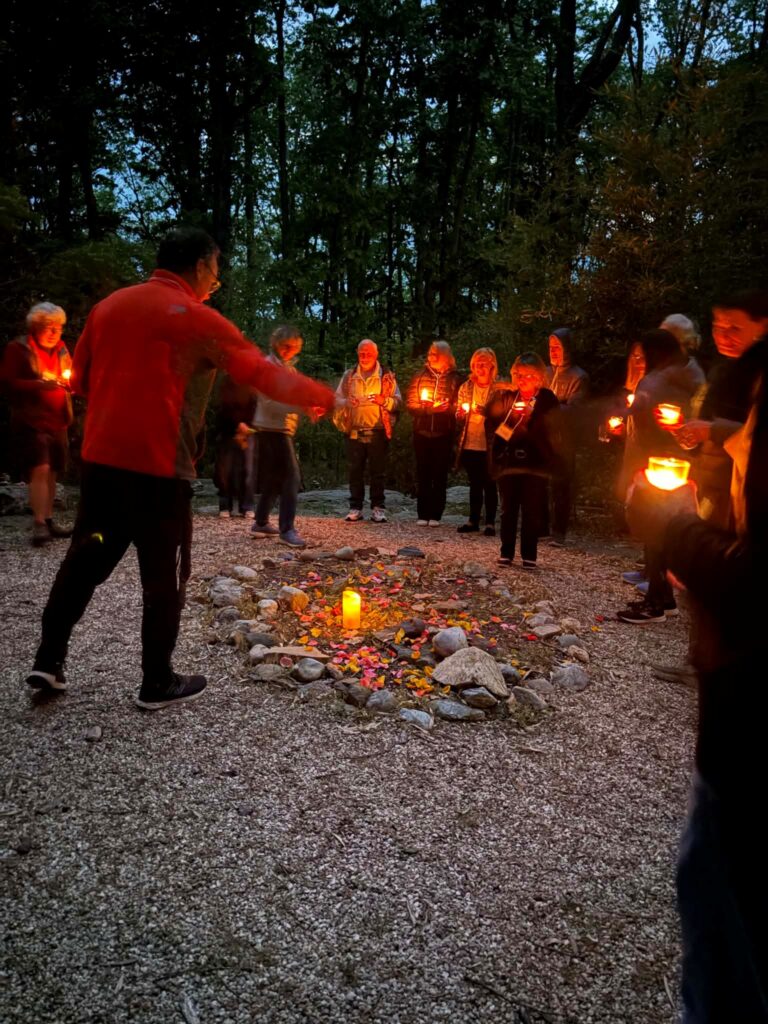
In the days that followed, I found myself returning again and again to the retreat in my mind. The first “getting to know you” conversation with Flo, where we talked quietly about loss — about the particular grief of watching someone you love slowly fade. The nature walk with Debbie and Michelle, where we laughed more than I expected. The closing circle, the release of scattering rose petals. Even art therapy, which I approached with uncertainty and left with meaning.
I had met many of these women on Zoom and a few of the men at the Towson monthly meeting over a year ago, . But at the retreat, we got to be together — to talk, to share, and yes, to laugh. We are caregivers, men and women, all doing the best we can, at different points on the same road. Some are further ahead on this journey, navigating the hardest stretch near the end. Some are just beginning to understand what this world feels like. But we are family now — a family that can hug, hold, support, and even make each other laugh as we move through the often isolating terrain of Alzheimer’s.
I am deeply grateful for this group of people who never wanted to belong to this club, but who show up for one another anyway — holding space for what has already been lost, and for what may still lie ahead.
Love and Gratitude by Susan
To the incredible Retreat Team – Deb, Kathy, Evie, Julie, Jill – and to my fellow travelers:
When we began our warm-up and were asked, “Are you ready to allow yourself to be cared for?” I sat down. My answer was a quiet but firm no. Julie asked why, and I thought a lot about that question. I realized I had spent a long time believing that doing everything myself was a sign of devotion, commitment, and strength, and that needing help, or taking time for myself, somehow signaled weakness.
This weekend helped me see that differently. Accepting care is not the opposite of caregiving. It is part of what makes caregiving sustainable.
During the rose petal exercise, I let go of some of my anger toward my partner’s family for not helping in the way I had hoped. But I also began to see the duality in myself: I can want help, feel hurt when it does not come, and still resist being seen as someone who needs it. I may sometimes send the signal, perhaps through my “motorcycle-riding persona,” that I am fine and can handle everything. Maybe, without meaning to, I have played some part in the cavalry not arriving, and in my own difficulty receiving care.
That is why the care you created this weekend mattered so much. It did not ask anything of me except to receive it.
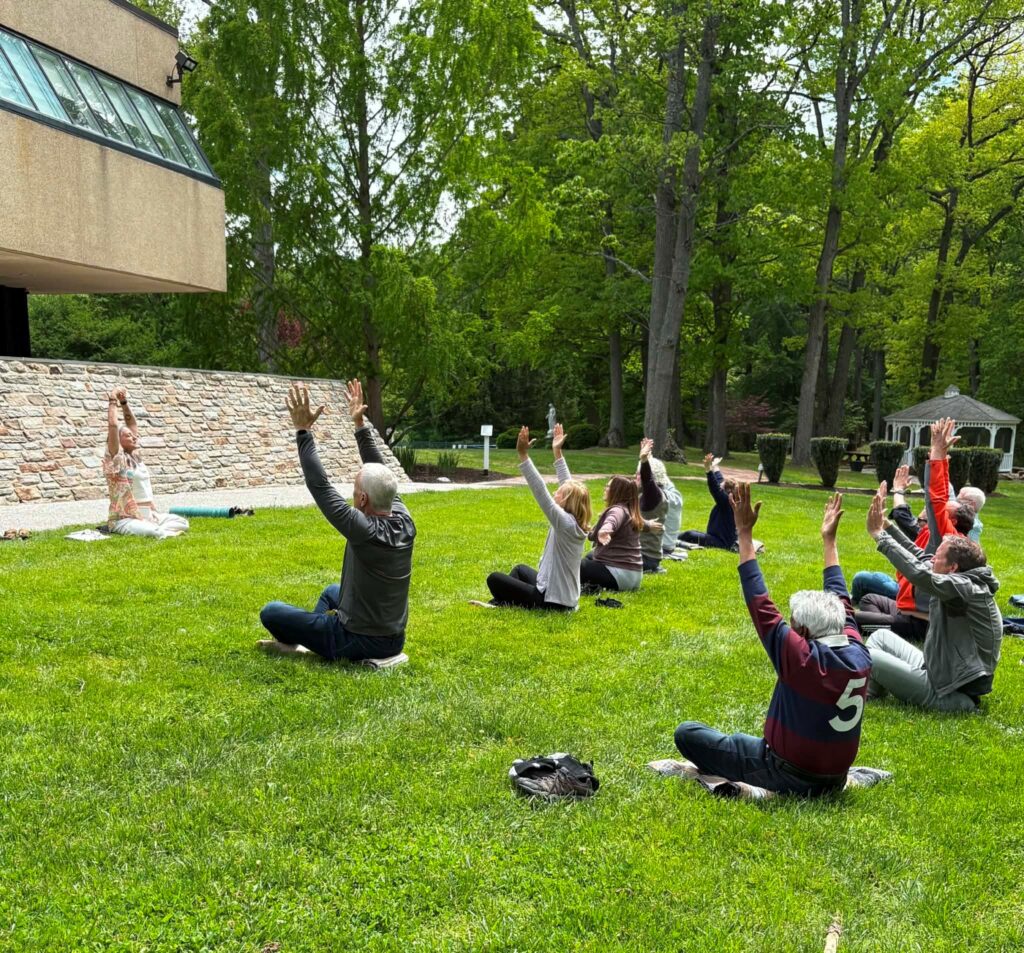
To the organizers, thank you for the care, intention, and attention to detail you brought to every part of the weekend. The yoga, meditation, massage, singing bowls, boxing, nature walks, meals, music, candles, affirmations, rose petals, and the effort involved in creating space for private massages all mattered. None of it felt superficial. It felt like a genuine and deeply thoughtful expression of care.
The weekend gave me tools to continue caring for myself as I care for my partner. It also helped me recognize that people do want to help, not only in a surface way, but deeply. Accepting that care is not weakness; it can bring meaning to both the person receiving it and the person offering it.
To my fellow travelers, thank you for the conversations we had one-on-one, in groups, over meals, and on our walks. Those moments reminded me that caregiving can feel very isolating, but we are not alone. The new friendships mean so much to me, especially the connections with men who are caring for women. I felt seen by people who understand that caregiving can hold many truths at once: wanting to be strong while feeling weak, love and frustration, gratitude and resentment, joy and sorrow.
Thank you for helping me find my way back to myself. And thank you for the sponsorship of the room and food that made it possible for me to participate. I appreciate all of it deeply.
Appreciation by Theresa
I don’t even know where to begin in expressing how much the caregiver’s retreat filled my soul with peace and joy. I attended the retreat last year as a new face within the YES! community and only a few months after my husband’s diagnosis and I was blown away by the dedication, compassion, and love the YES! leaders bestowed upon us.
This year I felt so comfortable being among all the amazing caregivers and leaders I have had the pleasure of getting to know better over the past year, and once again I was blown away by all the retreat offered. The planned activities were so well thought out and provided the relaxation we all so desperately needed.
I absolutely loved the massage, sound bowl healing, art therapy as a way to reconnect with myself. The boxing was a fun addition that helped release pent up frustration. But in addition, the impromptu discussions over meals and between activities provided for such release and connection among the care partners. We could compare notes on the daily chaos, laugh, cry, or just listen knowing that we are not alone in our struggles. That provided such comfort and peace to so many of us.
Finally, the level of devotion, hard work, and meaningful effort the retreat leaders put into making these weekends so special and memorable is like nothing I have ever seen in my life. You ladies truly are a unique blessing, and I am so very grateful to have found you along this journey. I would literally be lost without you. YES! has become my second family and I’m so honored to know and be among all the amazing facilitators and care partners.