About Young-Onset Dementia

What is young-onset dementia?

“Young-onset” dementia (YOD) is any form of dementia that is diagnosed before age 65.

Most people under 65 do not have the co-existing long-term medical conditions that older people experience, especially diseases of the heart and circulation. They are typically physically fit, and dementia may be the only serious condition that is affecting a younger person.

Click Here to Learn More
Yes

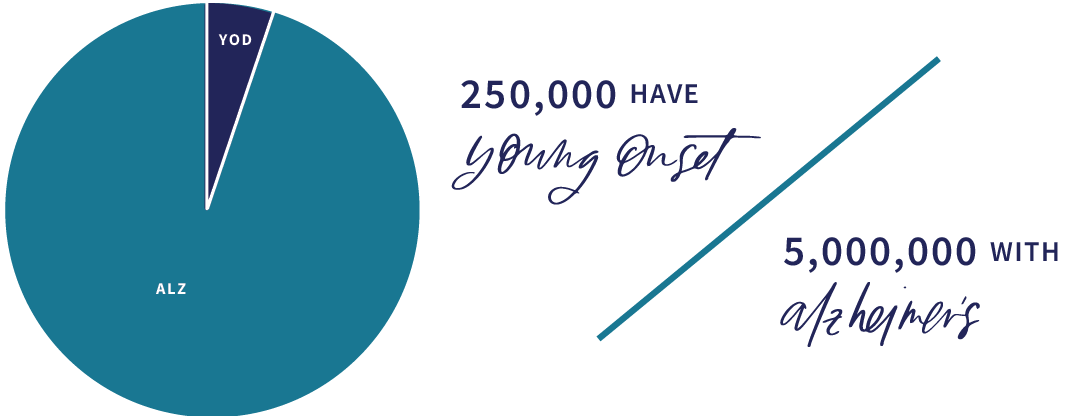
An estimated 5% of the 5 million Americans with Alzheimer’s and their families will face the unique challenges of Young Onset Dementia (before age 65).

Four types of dementia are among the primary causes of young onset dementia:

You may also hear YOD referred to as “early onset,” but to reduce confusion with “early stage” (meaning, in the first stages of the disease), the more clear “young-onset” terminology is being adopted.

Many people with young onset are in their 40s and 50s. They have families, careers or are even caregivers themselves when this disease strikes. In the United States, it is estimated that approximately 250,000 people have young onset.

Since health care providers generally don’t look for dementia in younger people, getting an accurate diagnosis of young onset dementia can be a long and frustrating process. Symptoms may be incorrectly attributed to stress or there may be conflicting diagnoses from different health care professionals. People who have YOD may be in any stage of dementia — early stage, middle stage or late stage. The disease affects each person differently and symptoms will vary.

Doctors do not understand why most cases of YOD appear at such a young age. But in a few hundred families worldwide, scientists have pinpointed several rare genes that directly cause Alzheimer’s dementia. People who inherit these rare genes tend to develop symptoms in their 30s, 40s and 50s. When Alzheimer’s disease is caused by deterministic genes, it is called “familial Alzheimer’s disease,” and many family members in multiple generations are affected.

If you are experiencing memory problems

Have a comprehensive medical evaluation with a doctor who specializes in Alzheimer’s disease or dementia. Getting a diagnosis involves a medical exam and possibly cognitive tests, a neurological exam and/or brain imaging. Contact your local Alzheimer’s Association for a referral.

Write down symptoms of memory loss or other cognitive difficulties to share with your health care professional.

Keep in mind that there is no one test that confirms Alzheimer’s disease. A diagnosis is only made after a comprehensive medical evaluation.

From The Alzheimer’s Association

The Challenges of Young-Onset Dementia Are Unique

Diagnosis and Misdiagnosis

Young-onset dementia is considered rare, which often means getting an accurate diagnosis is challenging and often takes a long time. Families know that receiving an accurate and early diagnosis is critical to managing dementia.

Typical misdiagnoses for younger patients include depression, high stress, sleep apnea, or symptoms that resemble other psychiatric illnesses. Surprisingly, there is a general lack of knowledge about young-onset dementia among many primary care physicians and specialists.

Loss of Income

The necessity of giving up employment and driving takes an emotional and financial toll on everyone in the family.

Younger individuals often face significant financial responsibilities when their prime earning years are cut short. Many families are still raising children at home.

As the disease progresses, a spouse or caregiving partner may need to retire earlier than planned. As caregiving responsibilities increase, they may reduce their work hours or become full-time caregivers when home care or residential placement is financially out of reach.

Changes in Daily Habits and Appearance

Changes in personal hygiene, including hair care, bathing, clothing choices, and overall self-care, often require increasing assistance. These changes can be emotionally distressing for both children and adults within the family.

Family Relationships and Life Milestones Are Disrupted

Maintaining healthy parent-child relationships can become increasingly difficult, especially when children are still living at home.

Young adult children may be starting careers, planning weddings, raising children, or attending college while coping with a parent’s diagnosis.

School-aged children may miss extracurricular activities because a parent is no longer able to provide transportation or the family cannot afford additional expenses.

Parents often struggle with deciding how and when to explain the diagnosis to their children. Many children mistakenly believe they caused the changes in their parent or feel embarrassed by their parent’s behavior during school or community events.

College-aged children frequently put their own education or future plans on hold to help care for a parent. While this decision may feel necessary at the time, it can have lasting effects as they begin adulthood.

Everyone Experiences Grief

Accepting and coping with the loss of abilities at a young age is especially difficult for the person living with dementia.

Family members must balance their own feelings of sadness, loss, and exhaustion while continuing to support their loved one.

Anticipatory grief—sometimes called dementia grief—affects every member of the family, regardless of age. Family roles shift, relationships change, and personalities may gradually change over time.

Care Partners Face Physical and Emotional Challenges

Physically fit younger adults with dementia may wander, become lost, or display aggressive behaviors, creating additional challenges for caregivers.

Older parents caring for their adult child often find themselves returning to the role of primary caregiver while managing their own aging and health concerns. Grandchildren may also require additional care and support.

Caregiver burnout and chronic stress are common and can affect nearly every aspect of a care partner’s physical, emotional, and mental well-being.

Managing Significant Life Changes

Families often lack personalized guidance for navigating the many difficult decisions that arise throughout the progression of dementia.

Managing growing medical expenses, insurance claims, copays, paperwork, and phone calls can quickly become overwhelming and time-consuming.

Losing employer-sponsored health insurance and applying for disability benefits is another essential but often frustrating and lengthy process.

As financial and caregiving needs change, some families may need to relocate or downsize to a smaller, more manageable home.

add the bullet points

The Challenges of Young-Onset Dementia Are Unique

Diagnosis and Misdiagnosis

  • Young-onset dementia is considered rare, which often means getting an accurate diagnosis is challenging and often takes a long time. Families know that receiving an accurate and early diagnosis is critical to managing dementia.
  • Typical misdiagnoses for younger patients include depression, high stress, sleep apnea, or symptoms that resemble other psychiatric illnesses. Surprisingly, there is a general lack of knowledge about young-onset dementia among many primary care physicians and specialists.

Loss of Income

  • The necessity of giving up employment and driving takes an emotional and financial toll on everyone in the family.
  • Younger individuals often face significant financial responsibilities when their prime earning years are cut short. Many families are still raising children at home.
  • As the disease progresses, a spouse or caregiving partner may need to retire earlier than planned. As caregiving responsibilities increase, they may reduce their work hours or become full-time caregivers when home care or residential placement is financially out of reach.

Changes in Daily Habits and Appearance

  • Changes in personal hygiene, including hair care, bathing, clothing choices, and overall self-care, often require increasing assistance.
  • These changes can be emotionally distressing for both children and adults within the family.

Family Relationships and Life Milestones Are Disrupted

  • Maintaining healthy parent-child relationships can become increasingly difficult, especially when children are still living at home.
  • Young adult children may be starting careers, planning weddings, raising children, or attending college while coping with a parent’s diagnosis.
  • School-aged children may miss extracurricular activities because a parent is no longer able to provide transportation or the family cannot afford additional expenses.
  • Parents often struggle with deciding how and when to explain the diagnosis to their children. Many children mistakenly believe they caused the changes in their parent or feel embarrassed by their parent’s behavior during school or community events.
  • College-aged children frequently put their own education or future plans on hold to help care for a parent. While this decision may feel necessary at the time, it can have lasting effects as they begin adulthood.

Everyone Experiences Grief

  • Accepting and coping with the loss of abilities at a young age is especially difficult for the person living with dementia.
  • Family members must balance their own feelings of sadness, loss, and exhaustion while continuing to support their loved one.
  • Anticipatory grief—sometimes called dementia grief—affects every member of the family, regardless of age. Family roles shift, relationships change, and personalities may gradually change over time.

Care Partners Face Physical and Emotional Challenges

  • Physically fit younger adults with dementia may wander, become lost, or display aggressive behaviors, creating additional challenges for caregivers.
  • Older parents caring for their adult child often find themselves returning to the role of primary caregiver while managing their own aging and health concerns. Grandchildren may also require additional care and support.
  • Caregiver burnout and chronic stress are common and can affect nearly every aspect of a care partner’s physical, emotional, and mental well-being.

Managing Significant Life Changes

  • Families often lack personalized guidance for navigating the many difficult decisions that arise throughout the progression of dementia.
  • Managing growing medical expenses, insurance claims, copays, paperwork, and phone calls can quickly become overwhelming and time-consuming.
  • Losing employer-sponsored health insurance and applying for disability benefits is another essential but often frustrating and lengthy process.
  • As financial and caregiving needs change, some families may need to relocate or downsize to a smaller, more manageable home.

Help Us Change Lives Together

Your support provides hope, resources, and a better future for those who need it most.
Donate NowSee Upcoming Events